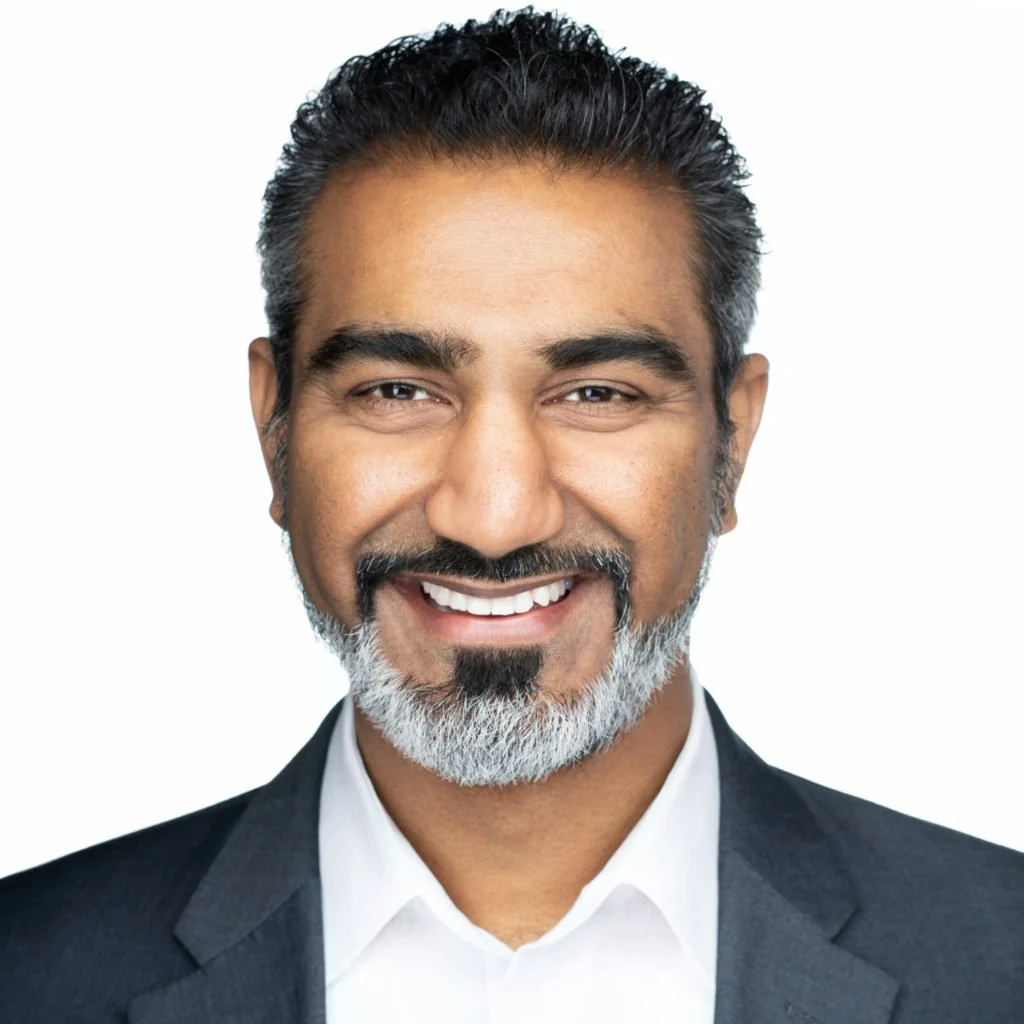

Zafar Awan kept coming back to the same thing.
Every call. Every conversation. You speak English so well. How did you get that accent? I could never sound like that.
It came from a real place. He's been podcasting in his second language for over a year. He interviews people from the US, from Europe, from Silicon Valley. And every time he hears himself play back, he hears the gap between how he sounds and how he thinks he's supposed to sound.
He was treating the accent like a fixed thing. A ceiling he was born under.
I told him about Tom Holland.
You know Tom Holland. He played Spider-Man in the last few films. He's British. If you've heard him in an interview, actually talking like himself, he sounds nothing like Peter Parker. Different rhythm, different vowels, different everything.
And yet in the movie, you don't notice. At all.
Because Tom Holland learned how to act American English.
Not to fake it. Not to deceive anyone. But to perform a character who lives in Queens, New York. The accent is part of the character. The character is what you're showing up as in that scene.
I have a friend who founded GO Box Studio. He's Japanese.
When he first started working in the American media world, his English was functional but accented. So he took acting classes. Not English classes. Acting classes. He learned how to perform the sounds, the rhythm, the cadence of Hollywood American English, the way actors learn a dialect for a role.
Now, when he's speaking English in a professional context, he's performing. He's in the character of a person who speaks that way. And when he switches back to speaking Japanese-accented English, in a casual setting, with family, that version comes back too.
The accent is a performance mode. You can learn it the same way anyone learns any performance skill.
Zafar went quiet when I said that.
Then: "This is making me so happy."
I've been thinking about this differently since that call.
I speak English, Urdu, and enough Arabic to read the Quran correctly. When I switch between them, my entire personality shifts slightly. The rhythm changes. The pacing changes. Different parts of my brain activate.
When I switch to Urdu, I have a Urdu accent. When I recite Quran, I use the proper tajweed. It's not that I "have" an American accent. It's that I've been performing in English since first grade, and the performance has become natural.
That's all fluency is. A performance you've done enough times that it doesn't feel like a performance anymore.
The fridge door is heavy the first few times you open it.
Shelly mentioned this same thing from a different angle on our call this week.
Her son can switch between an Irish accent and a British accent at will. He hears the differences most people can't hear, the subtle shifts in vowel placement and consonant stress. He's just naturally attuned to it.
Her daughter told her she could speak "like her friends at school," and then refused to demonstrate because she was embarrassed.
Kids absorb this stuff constantly. They're always performing, always adjusting, always code-switching. Adults think they've lost that capacity. They haven't. They've just stopped practicing.
If you're building a podcast in your second language, the accent isn't the enemy.
It's actually a feature, if you let it be.
People don't connect with you because of your vowels. They connect with you because of what you know, what you've been through, what you care about. Your accent is proof of context: proof that you've lived a life that produced a specific kind of knowledge.
But if the accent is genuinely holding you back, if the gap between how you sound and how you want to sound is creating friction, treat it like any other learnable skill.
Find acting coaches who teach dialect. Immerse in the spoken version of what you're learning. Record yourself, play it back, adjust. Every podcaster I know who improved their on-mic presence did it the same way: repeated exposure, honest feedback, and enough sessions that the new behavior becomes the default.
It's not about losing your voice.
It's about expanding what your voice can do.
Zafar has 300 interviews under his belt now. In his second language. On topics that matter deeply to him.
The accent didn't stop him.
Starting is what stopped him, until he started.