
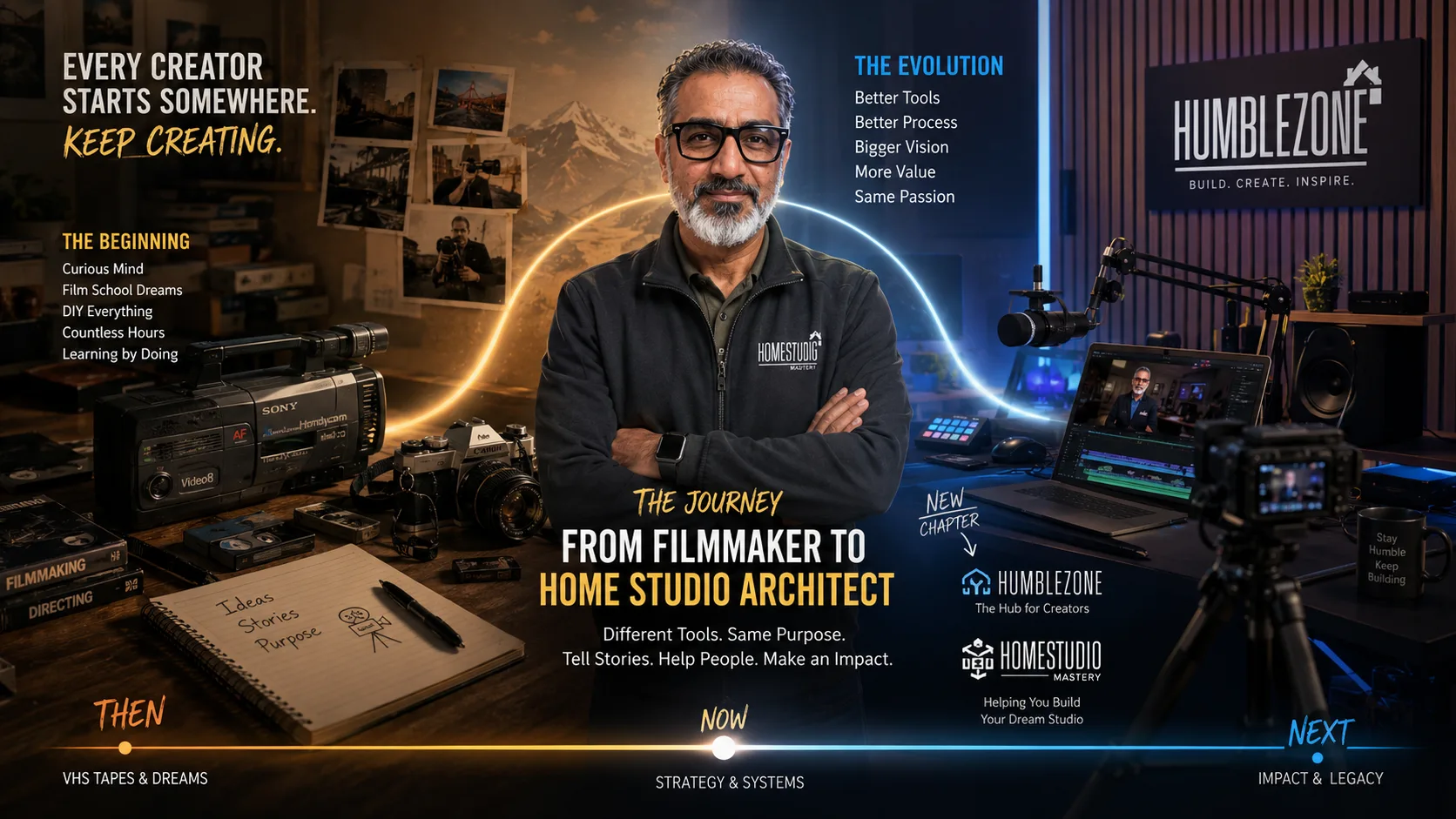
I've been behind a camera for about 30 years.
The fastest way I ever found to get better was to study work that had a better eye than mine. Not just look at it. Pick it apart. Why does this frame work? Where's the light coming from? What did they leave out?
Then take that back to my own work, and look at mine the same way.
That habit is Step 7.
Step 7 is the review loop
The first six steps build the studio, the plan and the growth. This one keeps it all improving.
You can get all six right and still plateau if you skip this one. Production, content and distribution all need feedback, and this is where you build the feedback in.
Record, publish, review, adjust, record again. It's a loop, not a line.
Three layers of review
After every episode. Watch or listen back before it goes out. Not to judge yourself, to observe. Where did the energy drop? Which question opened a door you didn't walk through? What would you cut? Plan on 20 to 30 minutes.
Once a month. Look at the numbers. Which episodes got the most views and shares? Which titles worked in search? Which guests and topics brought new subscribers? You're not counting vanity metrics. You're looking for patterns.
Once a quarter. Step back and look at the whole show. Is it serving the person you defined in Step 5? Is the series structure working? What should you stop doing, and what should you do more of?
The quarterly review is also when you look at the studio. Is there a bottleneck? Is there an upgrade that would pay for itself in time saved?
One change at a time
A review is only useful if it changes something.
After each one, write down one specific thing you'll do differently next time. One thing. Not a list.
Six months of one-thing-at-a-time adds up to a noticeably better show.
Study the best, don't copy them
Watch the top shows in your space with a notebook. How do they frame the shot? What's behind them? How do they open and close? How fast is the edit?
Don't copy it. Work out the decisions behind it, then make your own.
Why it matters
Without feedback, even good systems drift. You get comfortable. You stop noticing. The work gets good enough and stays there.
The review loop is the decision to never let good enough be where you stop.
That's all seven steps
Choose the room. Get the minimum gear. Make the room work. Pick software that keeps you recording. Plan content that compounds. Build growth into every episode. Then review, and do it again.
Each step builds on the one before it. The question isn't whether your setup is perfect. It's whether you're building toward something.
Start from Step 1. And if you want to know where your studio stands today, take the free 7 Stages quiz at homestudiomastery.com/quiz.
Hit record.