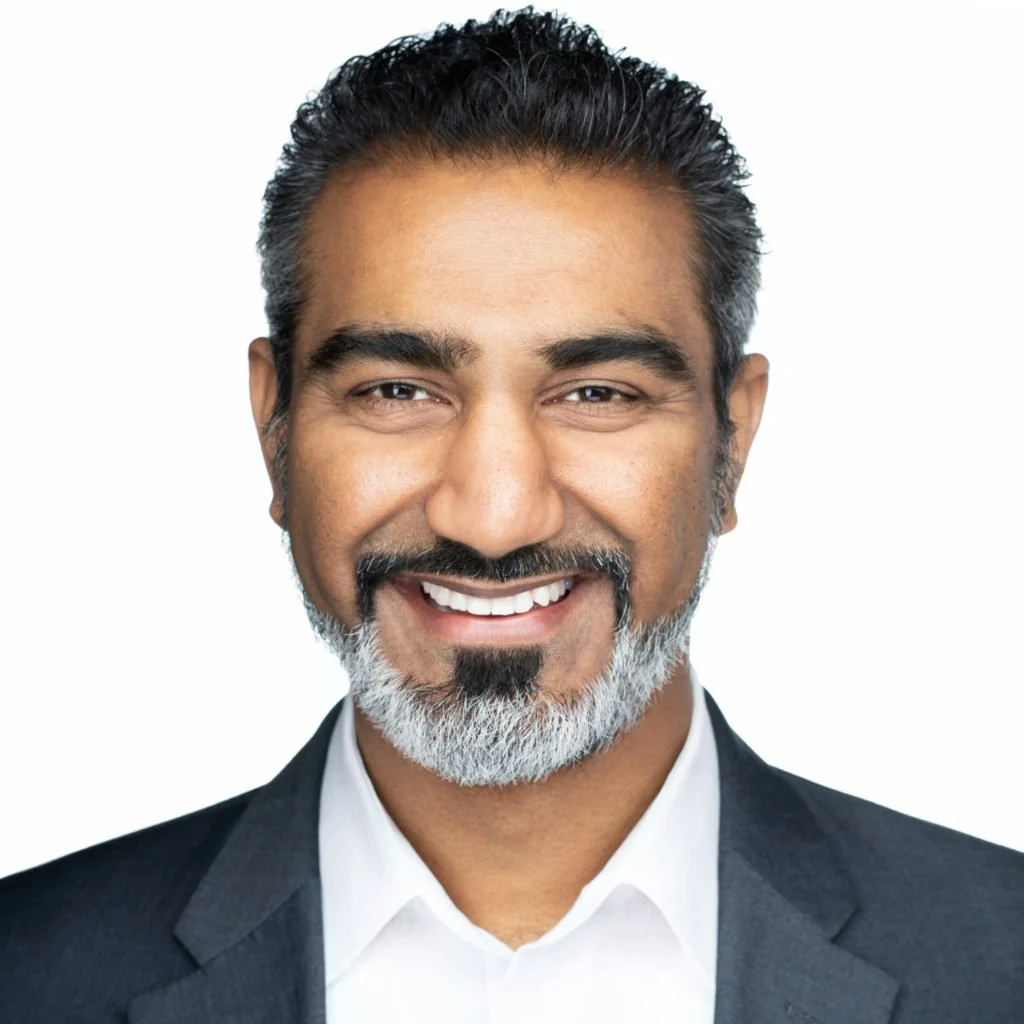

The first thing Zafar Awan said to me when we got on a call in April 2025 was that he was at the worst.
"I am at the worst. I want to learn."
He was a month into podcasting. He'd already gone through significant difficulty. He described everything as being "logged": blocked, stalled, not moving. He was 48 years old, based in Pakistan, trying to tell stories in his second language while raising four kids and attending an AI training program.
He'd found some of my content. He booked a discovery call.
He wanted me to be his mentor.
I told him he wasn't at the worst.
I told him he was at stage one.
Think about a newborn. We don't say a baby is the worst walker in the world. They're exactly where they're supposed to be. Everything they need to learn is still ahead of them. The material is already inside them. It just needs time.
Zafar had 48 years of lived experience. He'd been through real hardship. He had a deep, clear reason for podcasting: not money, but connection. A movement he was calling Global Abundance: a world where human energy goes toward building things instead of destroying them.
That's not nothing.
That's almost everything.
The Fear Inside the Camera
When he came back a few weeks later, he had a specific problem.
He could go live for two hours without stopping. Interviews were easy. But the moment he tried to record a solo video, just himself, no guest, he froze.
He asked why.
I told him: there's no feedback loop.
When you're live, the chat reacts. When you're interviewing, the guest responds. All of those micro-signals tell your nervous system: you're okay, keep going. A solo recording gives you none of that. Just silence and a blinking light.
So I gave him two things.
First, a reframe. Imagine the whole internet as a seven-year-old. When you talk to a kid, you slow down. You get patient. You explain things clearly and warmly. Zafar had been building that patience for years raising four kids. He already had the skill. He just hadn't thought to use it in front of a camera.
Second, the 30-day video challenge. One prompt per day. Sixty to ninety seconds. You focus on answering the question. The ego has nothing to protect because the topic is already defined.
He also told me something harder.
He'd been bullied before. When people were harsh or dismissive, he lost his confidence fast. He was asking me: what do you do when your self-esteem is the fragile component in your own system?
I told him about the Prophet Muhammad, peace be upon him.
Thirteen years in Mecca being ridiculed. Trash thrown at him. His family persecuted. He didn't leave until Allah said it was time.
What sustained him wasn't external validation. It was internal clarity about what he was doing and why, and the certainty that Allah Subhanahu wa Ta'ala had his back.
You don't need thicker skin.
You need a deeper why.
Fourteen Months Later
Zafar called me again in May 2026.
He had just passed 300 interviews.
I asked him how he got there. He told me he never actually tracked the number. He didn't know he was approaching 300. He was just showing up because he loved the conversations.
That's the whole thing, right there.
300 episodes in fourteen months. Second language. Laptop setup. Four kids. Pakistan. And he never once stopped to count.
His calendar looks completely different now.
He described it like this: "It's like a society where earlier the plots were empty, but now there are homes."
4,000 LinkedIn connections and climbing toward 10,000. Country contacts for his abundance movement in Sweden and India. Conversations with people from Peter Diamandis's Abundance 360 community. A women's group in the US that found him somehow and pulled him in. An Abundance Summit planned in Karachi.
One year ago he told me he was at the worst.
What Actually Drove It
He stopped waiting to be ready.
In our first calls, he was asking for perfect conditions: the right accent, the right gear, the right level of confidence. Then his teacher told him: don't plan a lot, just plan simple and execute. He actually took that seriously.
He stayed connected to the mission. Every interview was an act of service toward something larger. That kind of fuel doesn't run dry when the early numbers are thin.
He kept knocking on doors. A lot of them stayed closed. One woman he pursued for months finally responded and told him it was his persistence that convinced her. He wasn't tracking rejections. He was just moving.
He said something near the end of our last call that I've been sitting with.
"Each podcast is a book, honestly. I am doing it with the intention that someone will generate some value from it, and that value will get them a rizq halal, a lawful provision, and that rizq halal will get me to Jannah."
He's podcasting for the akhirah.
I've heard a lot of reasons people start shows.
That's the most honest one I've ever come across.
If you're at episode three right now and it feels impossible, you're not at the worst.
You're at stage one. That's not a judgment. It's a location.
From there, you move.
PodGlue is built to help you treat the conversations you're having as the asset they actually are: all 300 of them, not just the ones from last week. podglue.com