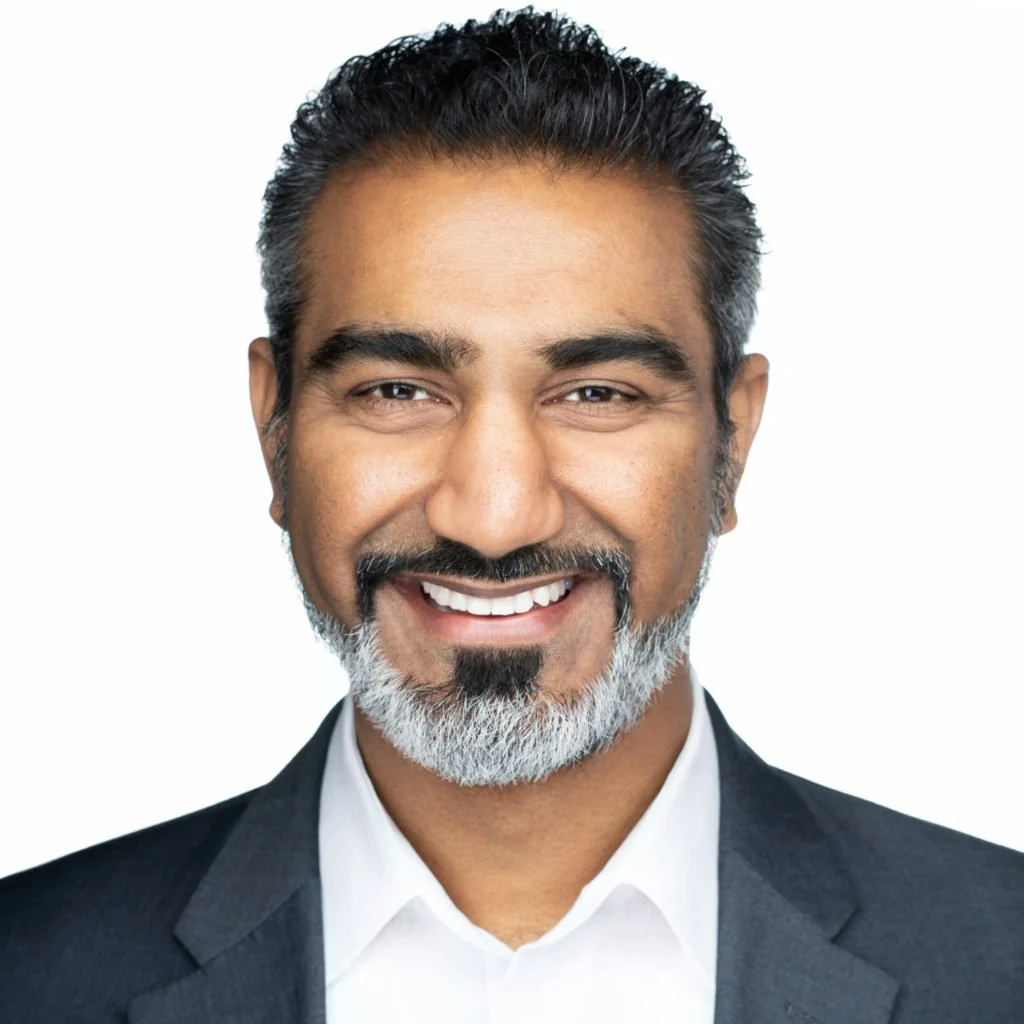
Yasir Wasi lives about ten minutes from me in Ashburn, Virginia.
We connected online, but when we got on the call he mentioned he'd been to Blend coffee in Ashburn. I know Blend. Good place. He goes there a lot. We'll probably end up at a table there eventually, over chai instead of coffee because that's where we both landed. Neither of us really does coffee.
He's building a personal brand for corporate clients. Enterprise architecture background, twenty-plus years in technology. Now he wants to position himself through video content on LinkedIn: teach what he knows, attract the kind of clients who hire someone like him, build trust with people who have never met him.
He asked me a question early in the conversation that I want to sit with for a minute.
He said: "What should I be doing on camera: how much of my personal life, how much of the professional, how do I build trust with people who are C-suite and don't care about my kids' school schedule?"
Here's what I told him.
Personal branding is not about becoming famous. It's trust design.
You're not trying to go viral. You're not trying to get followers. You're trying to create a set of signals, visuals, voice, consistency of perspective, that let a stranger decide whether they trust you before they ever talk to you.
For corporate clients specifically, the trust signals are different. They're not looking for relatability. They're looking for proof that you've seen the problem they're dealing with. That you've lived it. That you know what breaks and why.
So the content isn't: here's my morning routine. The content is: here's a problem your team is probably facing right now, and here's how I've seen it solved. Tell a real story. A real client situation. A real mistake you watched someone make and what they did after.
That's the personal. Not your personal life: your personal experience. That's what they're buying.
We talked about the practical side of building that content.
A daily LinkedIn video doesn't mean filming and posting the same day. Batch it. Take a weekend and record ten. Take twenty takes on the first one if you need to. Get it right. Then do the other nine in that same style and energy. Now you have ten pieces of content, and each one was only a fraction of the work it looked like.
Before you post anything, spend a week just commenting. Find the people in your target audience. Add them to your network. Comment on their posts: real comments, actual reactions, not one-word replies. You're telling LinkedIn: I'm here to give, not just broadcast. And LinkedIn will start pushing your content to more of those same people once you start posting.
Then post. Then watch what lands.
You'll see the age range of who watched. The industry. The geography. That data tells you more about your audience than any strategy session could.
Yasir asked whether this approach works for corporate clients, specifically. Whether C-suite people are on LinkedIn consuming this kind of content.
Probably not directly, I said. But their assistants are. Their VPs are. The people two levels below the decision maker, who are also the ones who shortlist vendors, who flag names for the person above them, who say "you should talk to this guy", those people are watching.
You don't get to the CEO by going directly to the CEO. You get there by being known among the people around him.
That's the slow path. But it's the one that sticks.
We talked about his camera setup. He has a Nikon D90 he's had for fifteen years. Barely uses it. I told him it would beat his iPhone for video, even at 720p, because of the sensor size and the lens. Add a cheap lavalier mic, a couple of LED panels, turn to face a flat wall, put something on the bookshelf behind him. Nothing expensive. Just intentional.
He was already thinking about the Nikon. He just needed someone to confirm it was worth pulling out of the closet.
At the end of the call, we got into something I wasn't expecting.
He recommended I look into meditation, the kind practiced by people in high-performance spaces, separate from prayer. He wasn't being pushy. Just curious. He said the people in my niche tend to find it useful, that there's something worth reading about.
I told him my meditation is when I get to do exactly what we were doing right then.
And then I said something I've said to other people but that landed differently in this conversation: "Islam has been teaching 5am for fourteen hundred years. The 5am club just branded it."
He laughed. He said: "Muslims are the biggest monks on earth. They just don't market it."
I've been thinking about that since.
There's a version of what I do, the content, the calls, the podcast, that is fundamentally an act of service. You learn something, you share it, you connect people who should know each other. You don't extract a fee for every touchpoint. You just keep showing up.
That's not a brand strategy. That's a practice.
The tools I mentioned to Yasir for building his setup, lights, teleprompter, Manus for AI scripting, are just the infrastructure. What he already has is the experience. Twenty-plus years of knowing where enterprise systems break. That's the content. That's what the people watching need from him.
Same with podcasting. The episode is just the infrastructure. The relationship is the content.
PodGlue is built to help you tend those relationships, episode by episode, guest by guest. If you're building toward something long-term, it's worth a look. Beta is open.