
Shameika Rhymes spent twenty years in TV news.
She knows how a camera works. She knows what a good interview looks like. She has been inside professional studios, watched crews set up lights, seen what it takes to put a polished product on air.
And then she left the newsroom. Built her own platform: Check the Rhymes TV. Started freelance writing. Took on hosting work for the Legal Podcast Network and Black Doctor. Got good at it fast.
But when we got on a call and I looked at her setup, the first thing I noticed was the microphone. And the echo in the room.
Here's what I see all the time with people who come from professional media backgrounds.
They know what good looks like, because they've been surrounded by it, produced by people whose whole job is to make it look that way. Cameras operators, lighting techs, audio engineers, studio coordinators. All of that expertise exists in the background, invisible, making everything work.
When you go out on your own, that expertise doesn't come with you.
You're in your loft with two ring lights and a mic you bought off Amazon five years ago. And you know the result doesn't look the way it's supposed to look. You just can't always name why.
Shameika knew her setup wasn't right. She'd watched her own videos back and thought: that mic sounds awful. What she didn't have was the vocabulary for what to fix first.
The hair light is a perfect example.
She had good lighting in front of her. But when I looked at the image, her shoulder was blending into the background. Wasn't dramatic. Wasn't obviously wrong. Just slightly flat in a way that's hard to articulate if you don't know what you're looking for.
I turned off my own hair light while we were on camera so she could see the difference. Shoulder disappears into the background. Turn it back on: separation. Clean visual edge between person and wall.
One light. One small adjustment. The whole image reads differently.
That's usually how it goes with home studio setups. It's not one big problem. It's five small ones, stacked.
The ring lights were another one.
She had two of them, working hard, lighting her beautifully. But they were also lighting the background. When she hosts for Black Doctor, she uses a white-based branded virtual background, and the light bleed was washing it out. She was losing the separation she needed.
The fix is a green screen. Pull-up style, sits on the floor, takes thirty seconds to deploy. Green screens are easy to key out in editing software, and Riverside, which she uses for LPN, handles it cleanly. Swap the ring lights for flat panels with an egg crate diffuser and now your light is directional. Stays in front of you. Doesn't blow out the background.
She was already taking notes by this point.
The microphone conversation is always the one people leave remembering most.
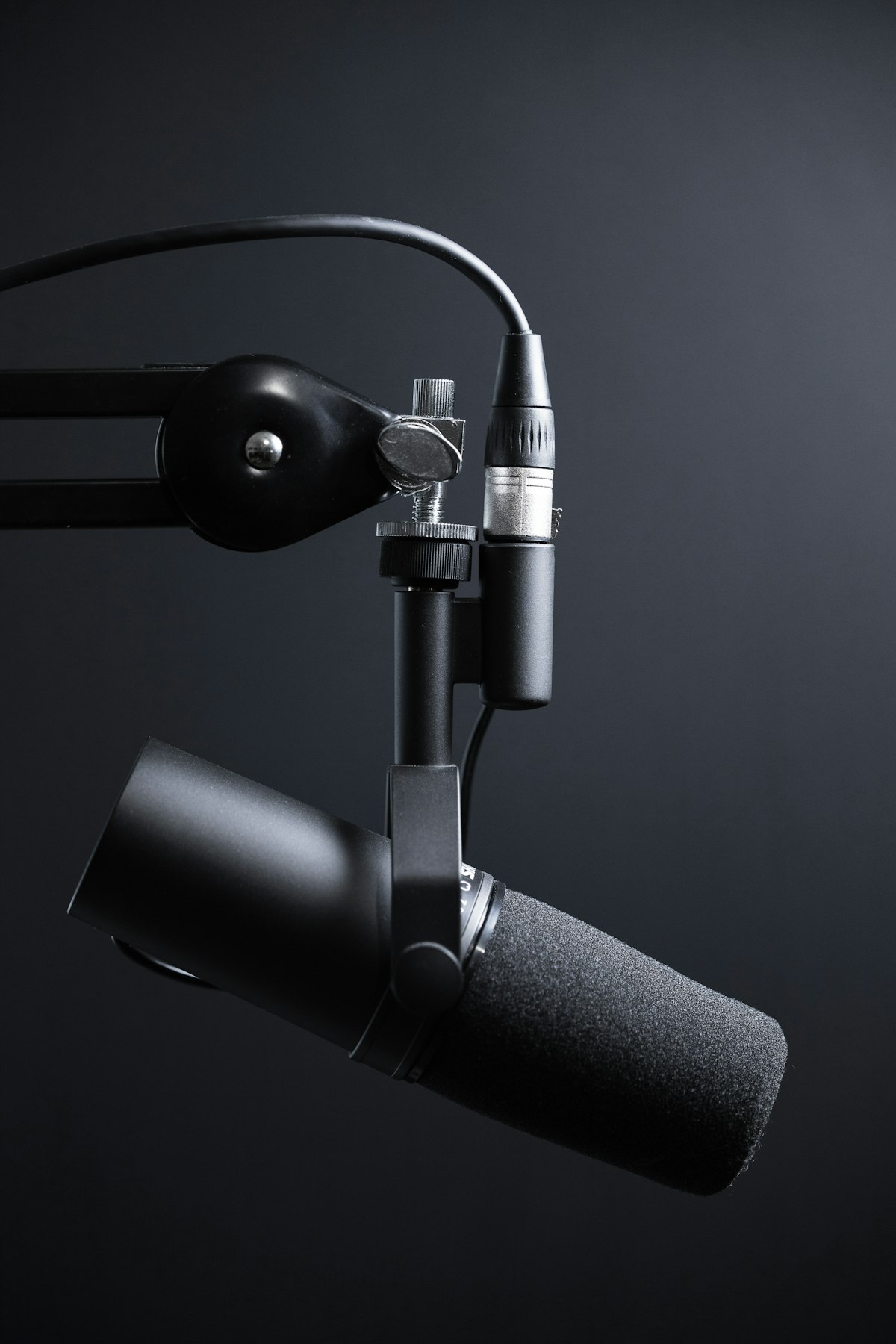
She had a clip-on boom arm setup, mic positioned across her body. The issue is simple: if the mic pickup is facing away from your mouth, you're working against yourself. Everything you say is reaching the capsule on a slight delay and from the wrong angle. You get that hollow, slightly off quality that nobody can quite name but everyone can hear.
I recommended the Shure MV7. USB-C and XLR in one. Same capsule as the MV6, its smaller sibling, just more flexibility if she ever wants to add a mixer down the line. Pair it with in-ear monitors that run directly from the mic, and she'd have a closed audio chain: no bleed, no echo, no wireless lag.
She mentioned the echo. I told her to experiment with the egg crate foam she'd bought for another room and never used. Put it in the corners behind her. That's where the room was bouncing. Add a bigger rug under her setup. Software like Adobe Podcast can help clean the rest, and she already uses Adobe for her day job, so nothing new to learn there.
What I love about conversations like this one is that the expertise is already there.
Shameika knows how media works. She knows how to conduct an interview, how to hold attention, how to structure a segment. Twenty years of that doesn't disappear just because the cameras are smaller now.
The technical side of home studio setup is learnable. It's a series of small, specific problems with small, specific solutions. Once you name them, they stop feeling overwhelming.
Get the microphone right. Control the light. Give yourself a clean audio environment. Then let the skill you already have take over.
That's the order. And it's shorter than most people think.
One last thing we talked about, and this one stuck with me.
She mentioned that she'd gone hard on her own podcast early on. Three episodes a week. Then burned out. Now she's repurposing old content: finds a clip when something pops up in the news, cuts it short, shares it. It performs. The archive is doing work she doesn't have to do manually.
That's not laziness. That's the system working the way it's supposed to. The conversations you had two years ago still have value. You just need a way to surface them at the right moment.
That's the whole idea behind what I'm building with PodGlue: that every episode you've ever made keeps working. Not just the ones you published last week.
If you're managing multiple shows, juggling hosting work, or trying to bring some structure to a back catalogue that's already bigger than you can easily track, that's exactly the problem PodGlue is built for.