
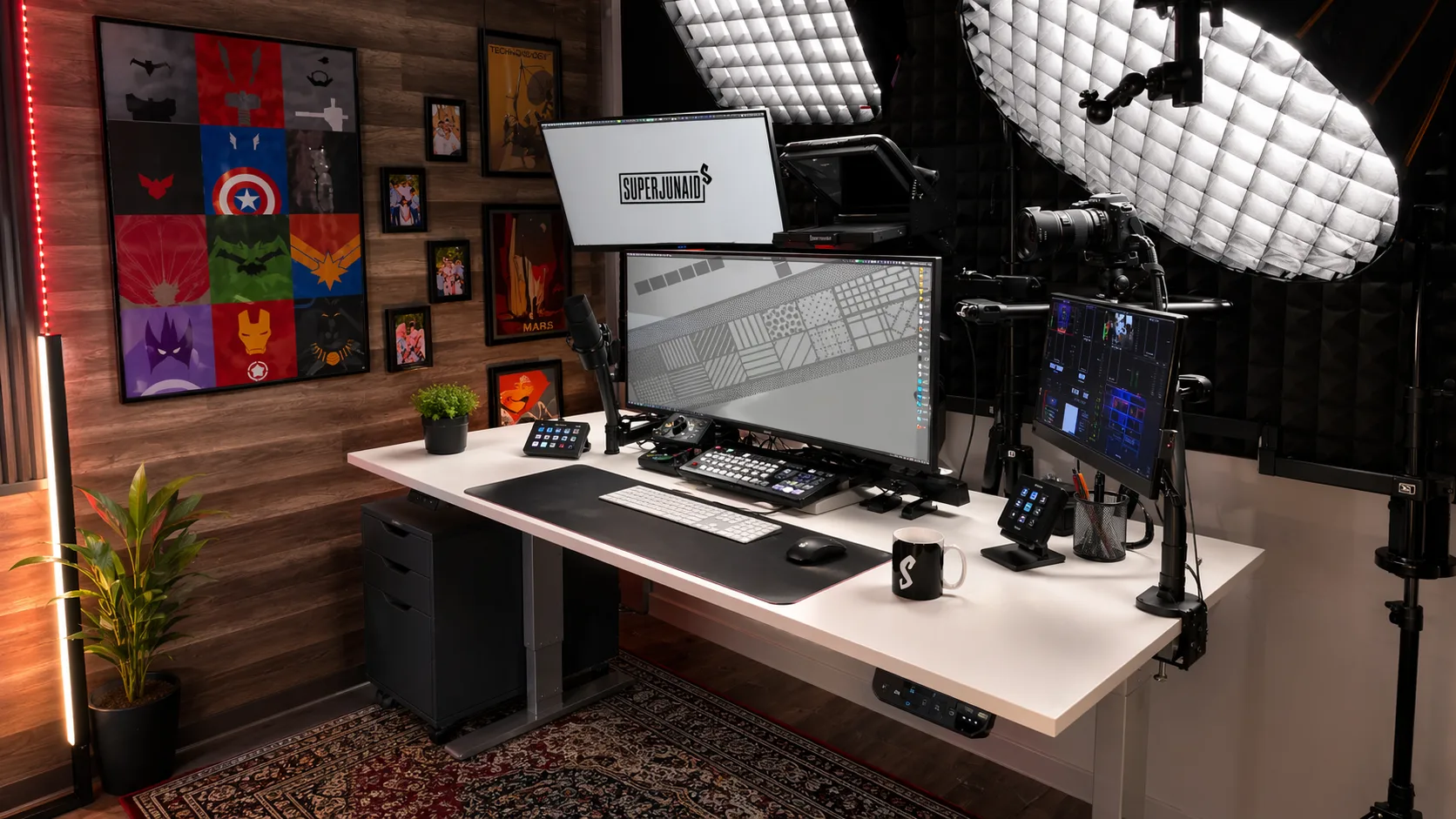
I spent 14 years setting up photography lighting rigs before it occurred to me to think about what the camera saw behind me. The full story of how that shift happened is worth reading if you're in a similar place.
The irony of that still gets me.
Here's what most creators do when they decide to level up their setup: they buy gear. A new microphone. A ring light. Maybe a camera upgrade. They solve the equipment problem and wonder why they still don't look or sound professional.
The gear is not the problem. The system is.
A home studio architect, the title I've been building toward for the better part of a decade, works at the intersection of three things most consultants handle separately.
Visual design
Your background communicates before you say a word. The color temperature of your lights affects how trustworthy you appear on camera. The geometry of your frame, where you sit in it, how much headroom, what's in focus behind you, these are design decisions, not setup questions.
Twenty-five years in UX taught me that how something looks affects how it's trusted. That principle doesn't stop at a screen. It applies to everything your audience sees.
Physical space
Sound travels in ways most people don't account for. Parallel walls create flutter echo. Hard floors add reverb. HVAC systems hum at exactly the frequency that sits under your voice and ruins an otherwise clean recording.
The room is the first instrument. It's usually the last thing people think about. I cover the most common acoustic treatment mistakes and what actually works in a home studio context.
Workflow systems
The most overlooked layer.
What's your capture-to-publish process? How long does it take to go from recorded to live? A beautiful studio that takes three hours to produce one episode is still a bottleneck. The setup should make showing up easier than not showing up.
Most consultants handle one of these three. A home studio architect handles all three, and designs them as a single system.
Why the title matters
"Podcast consultant" is too narrow. It ignores the visual layer. "Video producer" assumes you're not the one doing the setup. "Interior designer" doesn't know what a dynamic microphone is.
I landed on "home studio architect" because no other title described what the work actually was.
The intersection of visual design, acoustic treatment, and workflow systems is genuinely unoccupied territory. Most people in this space teach gear. I teach the system the gear lives inside of.
What working with a home studio architect actually looks like
We don't start with a gear list. We start with questions.
What kind of content are you making? Who's watching, and what does credibility look like to them? Are you doing solo recordings, video interviews, live streams, online courses? Do you have a dedicated room or are you in a corner of your living room?
From the answers, we design backward. Space selection or optimization. Acoustic treatment, usually far less than people expect. Lighting design. Camera position. Equipment choices matched to the room, not matched to a generic best-of list. And the capture workflow that makes your publish cadence sustainable.
The goal isn't the most impressive studio. The goal is the studio that produces the most consistent output with the least friction.
Home Studio Mastery is built on this
If you're building a studio, from scratch or from what you already have, Home Studio Mastery is the coaching program and layout service that applies this framework to your specific space.
You don't need a bigger room. You don't need more gear.
You need a system designed for how you actually work.