
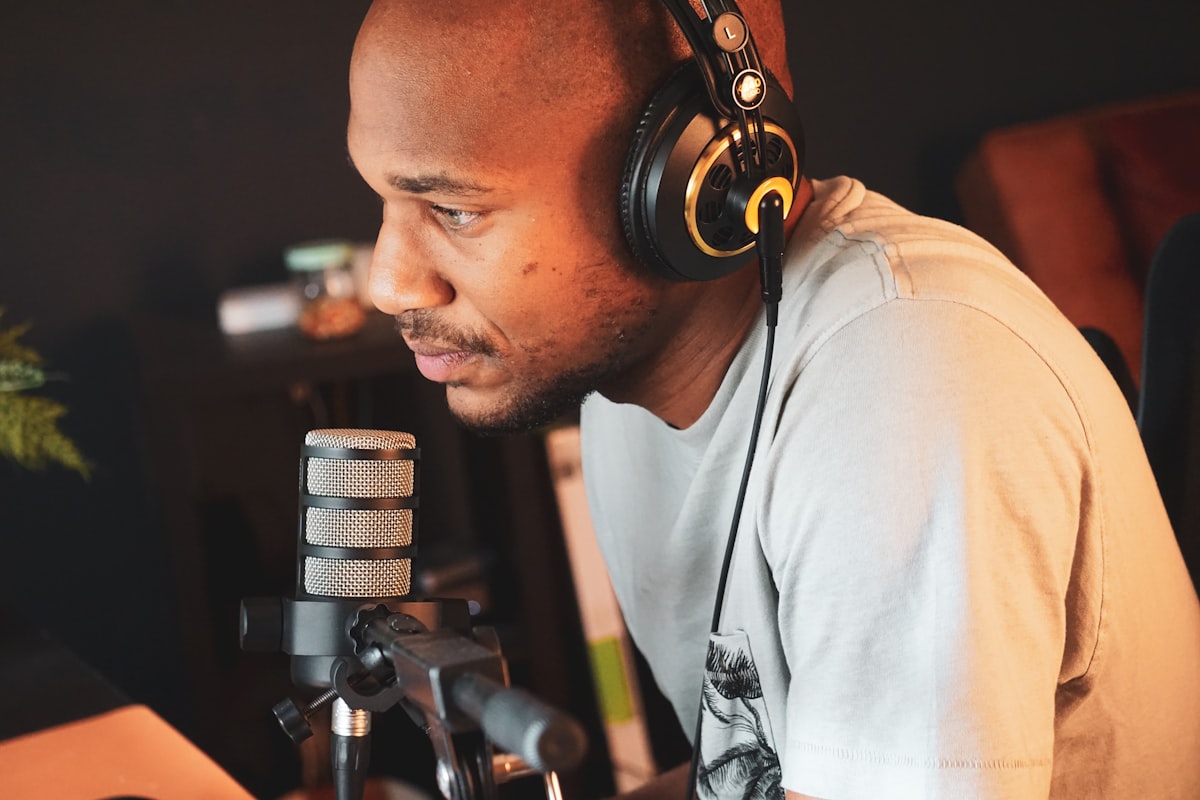
A guy in Atlanta runs a hair restoration business.
Hair restoration is competitive in Atlanta. Dozens of clinics, all competing for the same clients, procedures running anywhere from $5,000 to $10,000 each. He decided to start a podcast — audio only, no video, no studio. Just him talking about what he knew.
The first year alone, people were listening and flying to Atlanta from across the country to get the procedure done with him specifically. Not a cheaper option. The person they heard on the podcast.
The second year, he called me. He wanted to set up a video studio.
He already knew it was working.
Most people start a podcast to build an audience. That's a reasonable goal. But it's the wrong frame — and it shapes everything: what you talk about, who you're talking to, and whether any of it ever converts to something real.
The right frame: your podcast is an inbound marketing system.
The difference matters. A content channel produces output. A system produces results. A content channel asks "what should I talk about this week?" A system asks "what does my ideal client need to hear before they're ready to work with me?"
Those are different questions. They lead to very different episodes.
The 3% problem
Here's a stat that changed how I think about content: at any given moment, 3% of the people consuming your content are ready to buy. The other 97% aren't — but they're still listening.
Most podcasters optimize for the 3%. They pitch their offer, mention their services, drop their links. And then they wonder why nothing compounds.
The 97% don't need a pitch. They need to feel understood. That's the entire job of the first 10 episodes.
What your first 10 episodes are actually for
When someone's about to launch a podcast, they almost always ask me the same question: what should I talk about?
My answer: what does your ideal client ask you about all the time?
Not what you want to say. What are they already asking?
Those questions are the language your ICP is using right now. When you build episodes around them, you're not just making content — you're becoming searchable in the exact terms your best clients already think in. They type a question into Google, into a podcast app, into an AI. Your episode answers it. They find you before they ever intended to.
I was on a call recently with a physician who runs a coaching program for women entrepreneurs. She told me that people find her and want to spend hours with her asking the same questions over and over: how did you get started, can I actually do this, where do I even begin? She'd been answering those questions in person for years without realizing she had 10 episodes sitting right there.
Every question you've answered in person is an episode. Your first 10 should cover the 10 most common problems your ideal client faces — not your origin story, not your philosophy, their problems. When people hear their own frustration reflected back in your words, they don't think "interesting podcast." They think "this person gets it."
That's the conversion.
Niche down before you hit record
The other thing I tell everyone before episode one: pick one person.
Not a demographic. One person. What do they do? What are they stuck on? What do they want that they haven't been able to get?
The physician I mentioned had spent months serving everyone — women entrepreneurs of all kinds. When she finally said the thing she'd been circling: that her real passion was burnt out physicians who feel trapped in a career that's draining them — something clicked. That's a sentence that makes someone stop scrolling. That's a sentence that makes someone say "that's me."
A podcast that's for everyone is for no one. A podcast that's for burnt out physicians who feel stuck is for every burnt out physician who feels stuck — and they will find it, share it, and show up ready to work.
Start with that person. Build the first 10 episodes for them. Answer the questions they're already asking out loud.
The hair restoration guy didn't get lucky. He built a system — a way for the right people to find him, trust him, and decide he was the only one they wanted to call. His podcast did that work while he was in surgery.
That's what yours can do too.
If you're still figuring out what it actually takes to launch, start there. The system question comes after the show question. But once you're clear on who you're for — the machine builds itself one episode at a time.